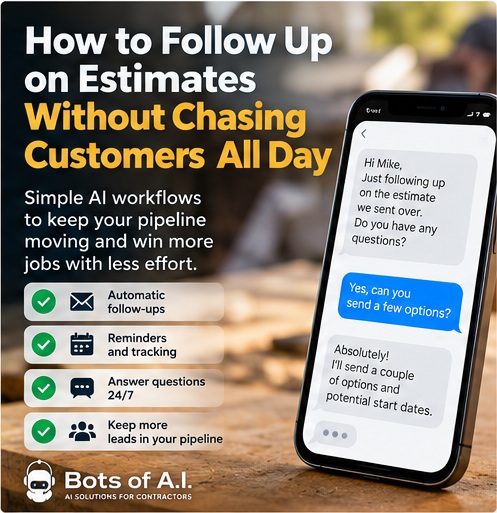
Preparing an estimate takes time, but sending the quote is only part of the sales process. Contractors can lose good opportunities simply because follow-up is inconsistent, late or forgotten. The answer is not to bombard customers with messages. It is to build a simple, repeatable system.
Why Estimate Follow-Up Gets Missed
Contractors are balancing field work, new appointments, scheduling, material questions, change requests and incoming leads. An estimate sent several days ago can quickly disappear behind today’s priorities.
A structured workflow can keep those opportunities visible without requiring someone to manually remember every follow-up.
1. Define a Simple Follow-Up Sequence
A useful process might include a confirmation after the estimate is delivered, a later check-in asking whether the customer has questions, and a final follow-up after an appropriate interval. The exact timing should match the company’s sales cycle and the type of project.
2. Use Templates Without Sounding Robotic
Templates save time, but customers should still feel that the message relates to their project. AI can help adapt an approved template using the customer’s project type, known questions and current estimate status.
3. Separate Interested Leads From Inactive Ones
A good CRM workflow makes it easy to see which customers opened a quote, requested changes, asked questions or have not responded. That context helps the office decide what deserves attention rather than treating every open estimate the same way.
4. Keep Humans in the Conversation
Automation should make communication easier, not create an endless automated sequence. When a customer asks a detailed pricing, scheduling or project question, the appropriate person should take over.
5. Track the Reason Estimates Do Not Close
Follow-up can provide useful business information. When possible, record whether the customer postponed the project, selected another contractor, changed the scope or simply stopped responding. Over time, those patterns can improve estimating and sales decisions.
What a Contractor-Focused AI Workflow Can Do
AI can draft personalized follow-ups, summarize prior communication, identify unanswered questions and help organize next actions. Connected to an appropriate CRM process, it can reduce repetitive office work while keeping the contractor in control.
See our contractor AI and automation services or request a quote for a follow-up workflow built around your existing process.